Tianjin Beijiang Maritime Safety Administration Adhere to "Four Strengthens" to Build a Solid Bulk Cargo Water Safety Supervision Defense Line
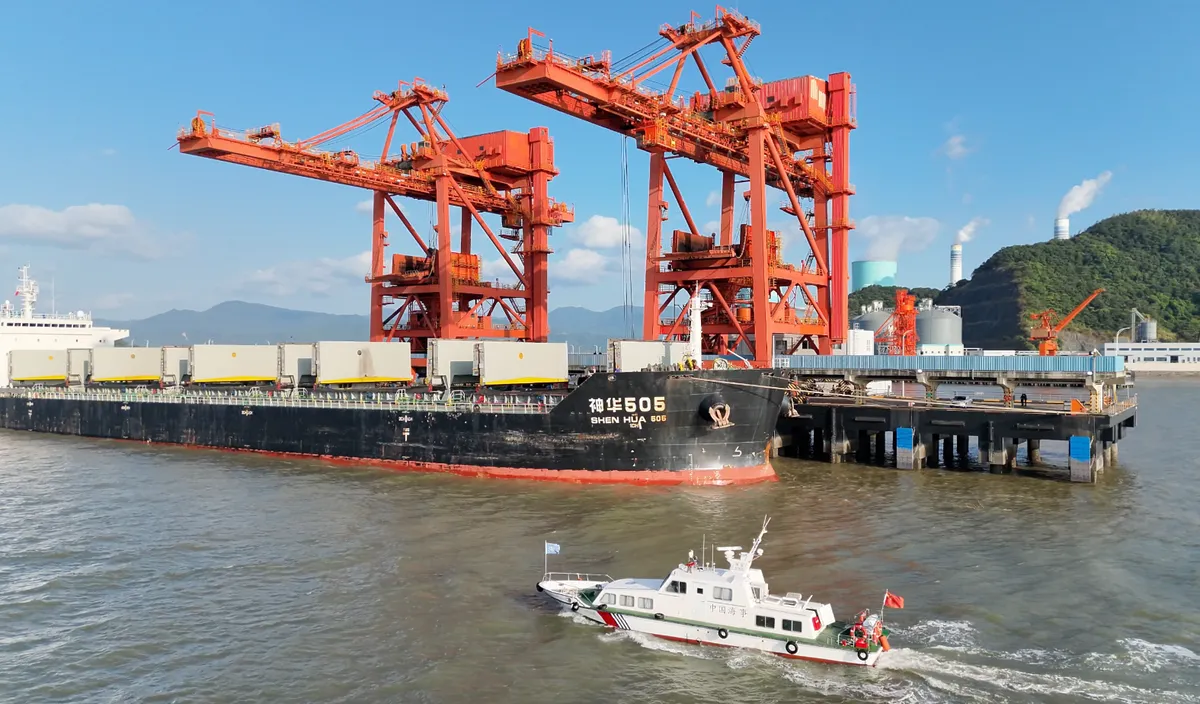
To ensure the stability of waterborne transportation in the jurisdiction, the Tianjin Beijiang Maritime Safety Administration, based on the actual waterborne supervision in the area, has precisely focused on key operational aspects and safety risk shortcomings in accordance with the "International Maritime Solid Bulk Cargoes Code" and the "Regulations on the Safety Supervision of Maritime Solid Bulk Cargoes." Through "four reinforcements," they have implemented precise measures to comprehensively strengthen the safety protection network for solid bulk cargo transportation, continuously consolidating the foundation for waterborne traffic safety management.
Strengthen Early Warning and Prediction, Deploy Proactively to Fortify the Defense Line
The Tianjin Beijiang Maritime Safety Administration has established a dynamic meteorological risk assessment mechanism, gathering and analyzing meteorological information in the jurisdiction's waters through multiple channels. They promptly disseminate warnings about adverse weather conditions such as strong winds and heavy rain to shipping companies, terminals, and vessels in port. Focusing on high-risk operations involving Group A solid bulk cargoes (prone to liquefaction or dynamic separation), they strictly enforce operational controls during adverse weather, prohibiting loading and unloading operations in the rain to preempt risks of ship capsizing or sinking caused by cargo liquefaction.
Strengthen Source Control, Strictly Verify to Eliminate Hazards
Adhering to the principle of proactive prevention and source governance, they strictly follow relevant regulatory standards, focusing on verifying the suitability of ships for loading solid bulk cargoes, the cargo stowage conditions, and the ship stability calculation reports. They rigorously check the authenticity and compliance of cargo moisture content test reports, transportable moisture limit certificates, and ship declaration materials, strictly prohibiting ships from carrying cargoes with excessive moisture content that are prone to liquefaction or dynamic separation, thereby eliminating safety risks at the source.
Strengthen On-Site Supervision, Conduct Precise Inspections to Fortify the Bottom Line
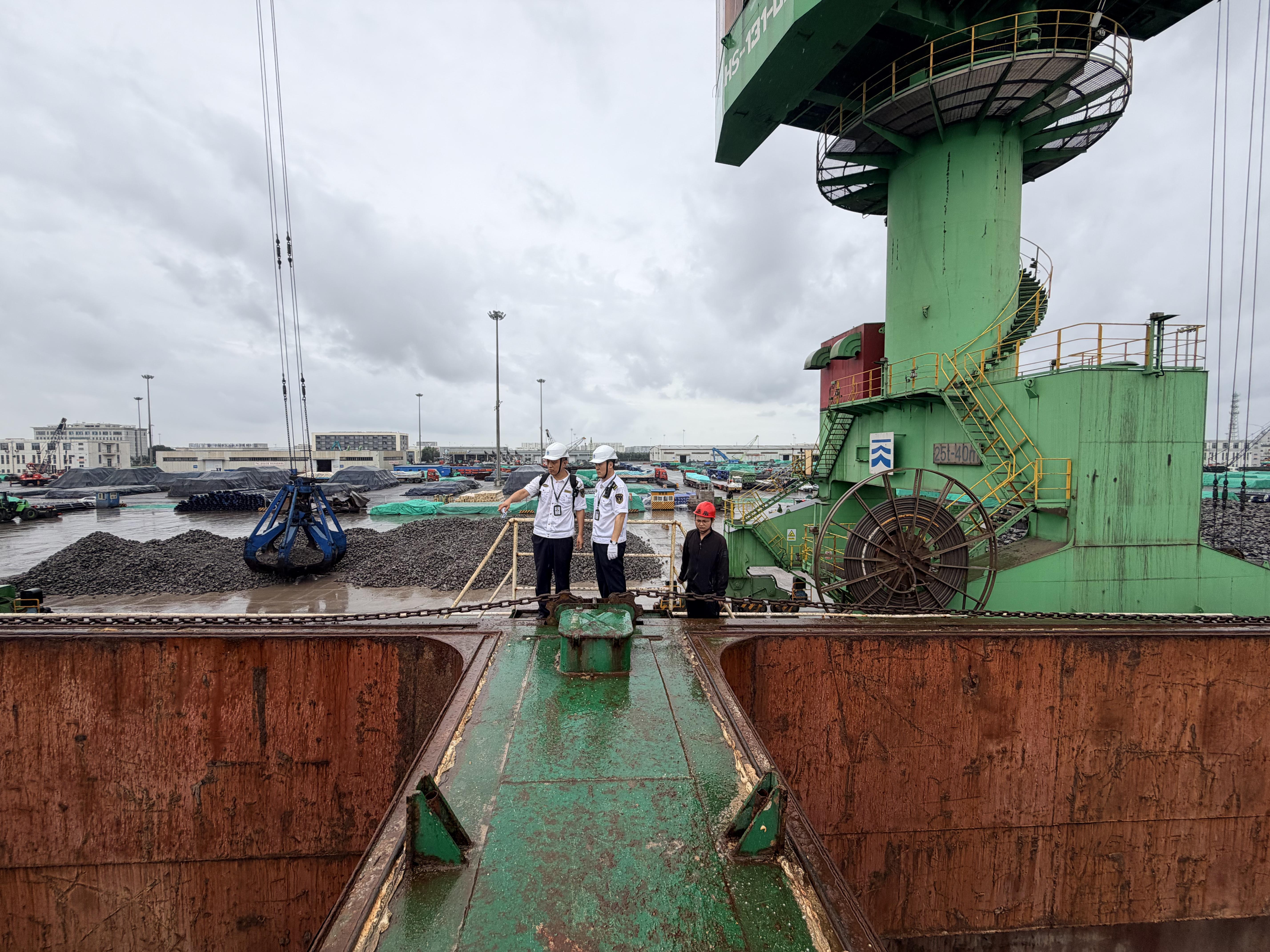
Law enforcement personnel work diligently on the front lines of terminal operations, conducting regular specialized on-site inspections of ships carrying solid bulk cargoes to ensure comprehensive supervision of key processes and vessels. They focus on inspecting the operation of cargo hold ventilation and drainage equipment, meticulously checking the weather-tightness of cargo holds, the state of cargo stowage, and compliance with stowage regulations. They strictly investigate on-site violations, resolutely preventing ships from "sailing with defects," ensuring the seaworthiness of ships, the suitability of cargoes, and compliance with operational standards.
Strengthen Education and Empowerment, Enforce Primary Safety Responsibilities
Balancing supervision with education and penalties with guidance, they conduct regular safety awareness campaigns based on typical waterborne accident cases, educating shipping companies, terminals, freight agents, and ship personnel in the jurisdiction about solid bulk cargo transportation safety. They provide detailed explanations of the risk characteristics of transporting cargoes prone to liquefaction or dynamic separation, standardized operational procedures, and key points for emergency response. They urge companies to improve safety management systems, conduct regular training and self-inspections, guide ships to enhance pre-departure self-checks, and strengthen navigation safety inspections, fully enforcing the safety production responsibilities of all entities.
Moving forward, the Tianjin Beijiang Maritime Safety Administration will continue to focus on key safety risk points in solid bulk cargo transportation, maintaining regular and meticulous full-process supervision. They will dynamically monitor ship departures and navigation activities, continuously optimize safety supervision measures, strictly implement various safety assurance measures, and make every effort to prevent and mitigate waterborne transportation safety risks, ensuring the stability and orderliness of waterborne transportation in the jurisdiction.
-
The embankment grows fresh greenery, egrets accompany the boat's journey — embarking on a boat to explore the "beautiful waterway" of the Li River.4764
-
The first zero-carbon container shipping route in the Guangdong-Hong Kong-Macao Greater Bay Area has officially been launched.3824
-
The Seminar on Empowering New Productive Forces in Marine Oil and Gas Engineering Equipment Was Held in Fuzhou.3191
-
Fighting "foreign lawsuits" well is the essential skill for Chinese companies going global.4461
-
The International Training Program on Green and Low-Carbon Shipping Technologies for the Belt and Road Initiative Kicks Off3621